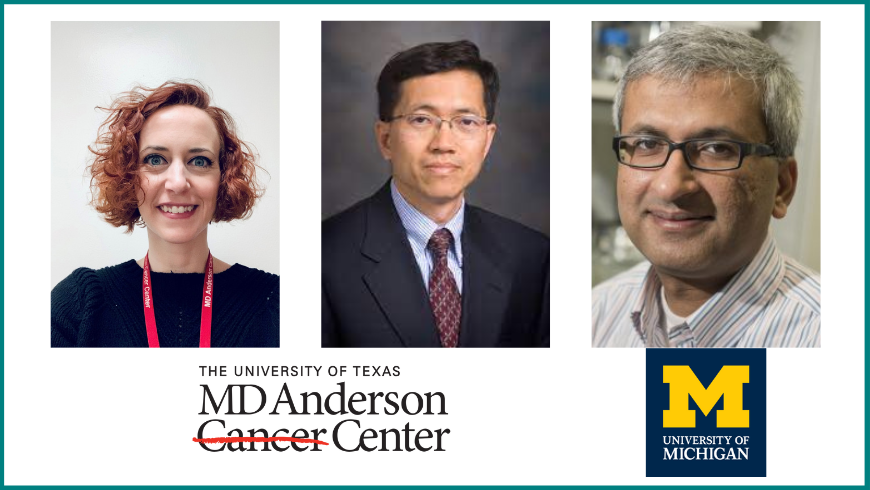

2026-27 Team Science Grantees: Angela Belcher, PhD, Lan Coffman, MD, PhD & Kripa K. Varanasi, PhD


About Project
Investigating Physico-Chemical Properties of Mesenchymal Stromal Cells as Biophysical Markers for Early Detection of Ovarian Cancer
PROJECT SUMMARY
Ovarian cancer is the most deadly cancer affecting women’s reproductive organs. Eighty percent of women are diagnosed only after the cancer has already spread. When this happens, only about one in four women survive five years. Today’s tests cannot find ovarian cancer early because it starts as tiny changes inside the fallopian tube and there are no good ways to tell who has these early cancer cells. Our research aims to find these changes before they turn into full blown cancer. We are developing new ways to detect the earliest signs of cancer formation by looking for unique changes in special support cells, called high risk mesenchymal stromal cells (hrMSCs), that surround the very first cancer lesions. These cells become less sticky, and more acidic. By measuring these changes, we hope to find these cells before they become cancer.
We are also using a gentle collection device that can pick up live cells from the fallopian tube. This means we can not only detect early risk but also test new drugs directly on living cells in real time. By doing so, we can see which treatments might work best for each patient long before cancer ever advances.
Our goal is to give doctors better tools to find ovarian cancer earlier, help women avoid late-stage diagnosis, and provide new options for prevention and treatment. We hope this research will improve survival, bring hope to families, and save lives.
EXCITING DISCOVERIES FROM THIS PROJECT!
Researchers at the University of Pittsburgh Medical Center have made a groundbreaking discovery in the fight against ovarian cancer. Led by Dr. Lan Coffman, a Tina’s Wish funded researcher and a Scientific Advisory Board member, the team has uncovered a new cause of a dangerous form of ovarian cancer. They identified a specific group of early-stage cells in the fallopian tube’s supportive tissue that may play a crucial role in triggering the disease.
According to Coffman, compounds secreted by these cells, which can be detected in the bloodstream, have the potential to serve as biomarkers for early-stage ovarian cancer.