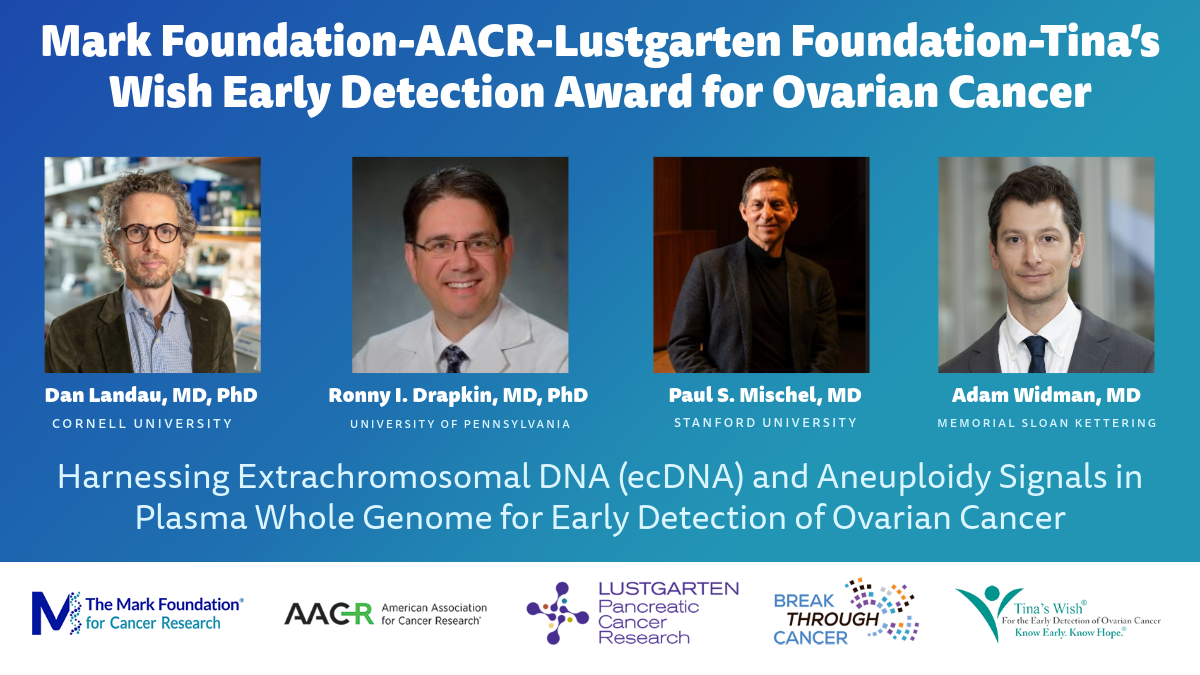

2026-2027 Team Science Grantees: Leyuan Ma, PhD & Ronny Drapkin, MD, PhD


About Project
Engineering theranostic T cells for life-long detection and interception of ovarian cancer
PROJECT SUMMARY
Ovarian cancer (OC) is one of the most lethal gynecologic malignancies in women, with 324,603 global cases in 2022 and a projected 55% incidence growth by 2050. While the standard care combining platinum-based chemotherapy achieves 80% initial response rates, over 70% of patients relapse within 5 years. Thus, early detection and timely interception remain a major unmet medical need for this lethal disease. However, OC is a complicated group of diseases characterized by variations in morphology and biological behavior, such as highgrade serous carcinoma, endometrioid carcinoma, clear cell carcinoma, and others. Therefore, to accurately diagnose and intercept all subtypes of OC, an OC-agnostic and subtype-independent approach is needed. During OC progression, OC tumor microenvironment acquires features distinguishing it from that of the healthy tissue, and these features are often conserved across many OC subtypes. Immune cells, especially T cells, are known to patrol the body for malignant lesions, potentially by sensing these shared OC-specific features. However, T cells naturally do not have the capability to report the presence of OC and their activities in OC are often suppressed. Here, we employ a synthetic biology approach to build a “control module” that equips T cells with two capabilities: 1) report the presence of OC, 2) initiate the killing of OC cells, which together endow T cells with a theranostic potential. Considering that T cells have life-long persistence in human, this T cell-based theranostic approach could enable potentially life-long early detection and interception of OC in the high-risk population.